

dynamic quality framework

 by Dace Dzeguze
05/03/2020
It's now possible for DQF users on SDL Trados Studio to send metadata-only and still be able to generate detailed quality evaluation reports on the DQF Dashboard.

 by Milica Panić
03/03/2020
Data are the key to process improvements, quality control, and automation, and they can be collected in a GDPR-compliant way. Learn how TAUS DQF treats your personal data.
 by Dace Dzeguze
25/02/2020
What is quality assurance? How can you do translation quality assurance in the most efficient and data-oriented way?
 by Milica Panić
07/02/2020
What is TAUS DQF? What does DQF stand for? Everything you want to know about the Dynamic Quality Framework.
 by Dace Dzeguze
11/07/2019
The DQF plugin for productivity and quality tracking in SDL Trados Studio is the most popular DQF integration. Here are the six reasons why.
 by Milica Panić
15/01/2019
In a PhD study whose goal was to set up a method for evaluating the quality of machine translation output and for judging its readiness for use in production, DQM-MQM turns out to be an invaluable addition to automatic MT quality metrics.
 by Şölen Aslan
14/01/2019
The DQF data accumulated and processed over the years has reached the point where it can be used to inform strategic business decisions. The stats from that data will be shared quarterly as a Business Intelligence Bulletin to inform the translation and lozalization industry.

07/01/2019
Close to 200 million words have been processed by DQF in the past year. Thousands of translators and reviewers have DQF plugged into their work environment. Now with BI Bulletins, Confidence Score, MY DQF Toolbox and DQF Reviewer, it is bringing the industry one step closer to ficing the operational gap.
 by Dace Dzeguze
13/08/2018
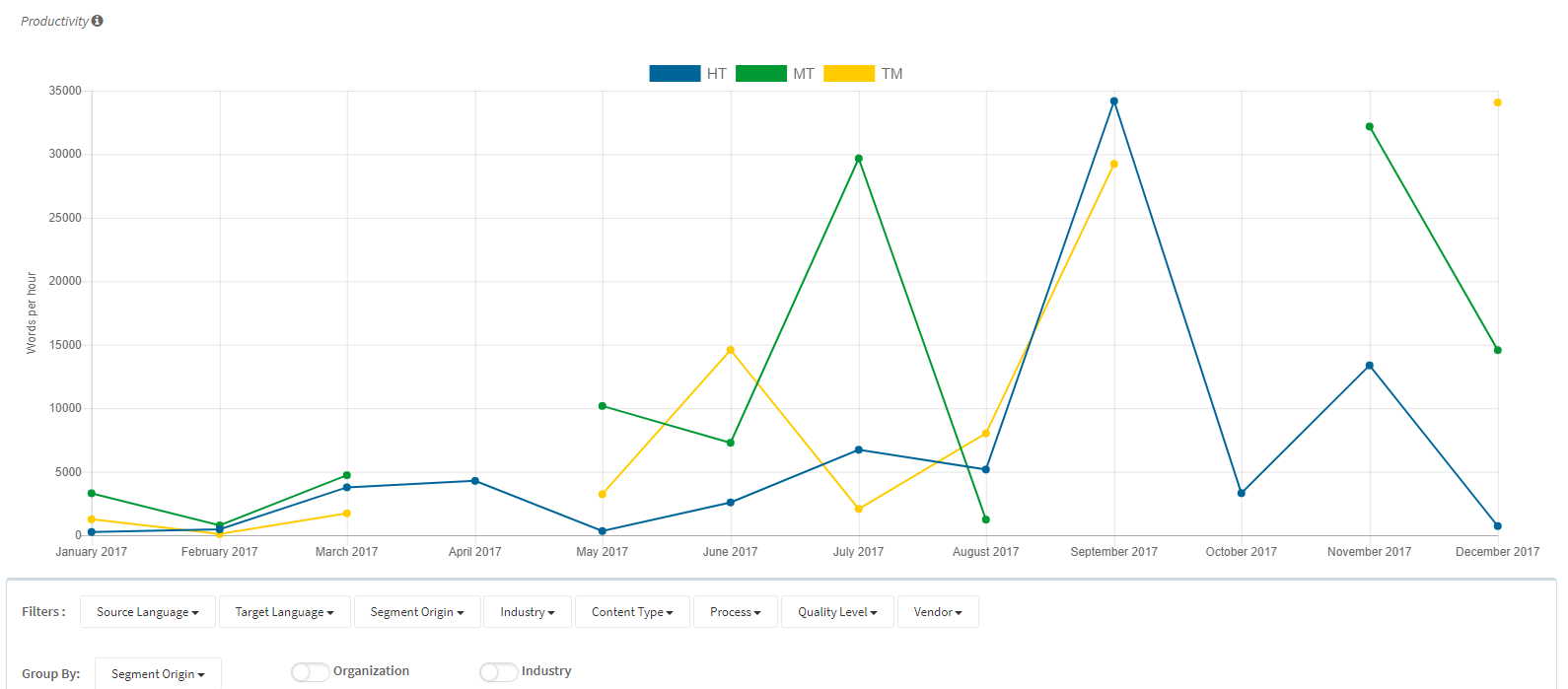
Since July 2018, the TAUS Quality Dashboard features the first set of trend reports on translation productivity and correction density. In this post, we list the benefits that DQF (Dynamic Quality Framework) API users can get out of the TAUS trend reports.
 by Milica Panić
08/08/2018
Use Case: Dell-EMC produces high volumes of translated content – more than 200 million words in more than 34 languages and dialects annually using four different vendors. Since July of 2017, 78 million words have run through the DQF integration, with plans to have all volume flowing through the integration within the next year.
 by Milica Panić
16/07/2018
With machine translation and productivity challenges, LSPs need to become data owners and risk brokers, similarly to insurance companies. Managing your business means managing your data. If you collect and analyze productivity data, you can manage the risks of low productivity and profitability.

 by Attila Görög
23/06/2017
In this blog post we will highlight some of the standards and metrics used in translation quality management.


23/06/2017
Error Typology is a venerable evaluation method for content quality. In this blog post Kirill Soloviev describes how to use it.
 by Attila Görög
08/10/2015
The TAUS efficiency score replaces traditional productivity measurement as it can be applied to every form of translation.