EPIC



SPECIALIZED QUALITY ESTIMATION MODELS
Quality Estimation Tuned for Specific Locales and Domains
Pre-trained models that evaluate machine translation accuracy where generic baselines fall short.
General
Broad coverage
Specialized
Included
Specific locales and domains, included with TAUS EPIC.
Custom
Built by TAUS from your data
← COVERAGE
SPECIFICITY →
What is a Specialized QE Model
PRE-TRAINED ON CURATED DATA FROM

A specific industry sector
such as legal or medical

A regional language variant
such as Canadian French
FINE-TUNED TO RECOGNIZE
Local conventions
Institutional acronyms
Specialized terminology
A Specialized QE Model is an AI evaluator pre-trained on curated data from a specific industry sector (such as legal or medical) or a specific regional language variant (such as Canadian French).
Unlike a generic model that is trained to evaluate general content types, a specialized model is fine-tuned to recognize the local conventions, institutional acronyms, and specialized terminology of a specific domain. It evaluates translation accuracy without needing human reference translations, giving you domain-accurate scoring without the overhead of building a bespoke custom model from scratch.
Every TAUS EPIC user has access to our Specialized QE Models alongside our default Generic model.
Available Models
WHAT IT DOES
Evaluates English to Canadian French translations using Canadian institutional, legal, and regional terminology.
THE ISSUE IT SOLVES
Generic models default to European French standards. They often penalize correct Canadian terminology (such as courriel or institutional acronyms like BLLAD) as errors.
RESULT
Narrows the review band and reduces unnecessary human post-editing on valid Canadian French segments.
24 EU Languages
WHAT IT DOES
Dedicated evaluation model calibrated for cross-border European Union administrative, legal, and public sector terminology.
THE ISSUE IT SOLVES
Recognizes the terminology and conventions of official EU texts in every official EU language it covers.
RESULT
Narrows the review band on legal and administrative content, so reviewers spend their time on the segments that change legal meaning.
Why Use a Specialized Model Instead of Generic?
Generic QE models evaluate text against broad baselines. When text contains regional terms or industry-specific vocabulary, generic models often flag valid translations as questionable.
A Specialized model accounts for these regional conventions and domain vocabulary. This means:
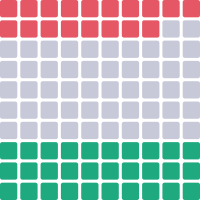
GENERIC MODEL
Wide gray area
Valid regional terms land in review.
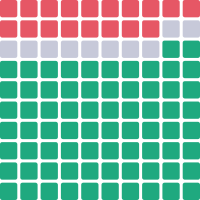
SPECIALIZED MODEL
Narrow gray area
More goes straight to publish.

Illustration of the idea, not measured data.
01
Fewer False Flags
Correct regional terms are recognized as accurate.
02
Narrower Gray Area
Clearer separation between segments that are ready to publish and segments that need human editing.
03
Reduced Review Volume
More high-quality content moves directly to publication without unnecessary manual intervention.



Ready to Automate Quality Control in Your Translation Pipeline?
Specialized models are available on the TAUS EPIC free trial. Choose the model yourself and compare it with the Generic model on your own content.