

EPIC
OVERVIEW
What is EPIC?
The platform in a nutshell
Choosing a QE Model
Match model to content & risk
EPIC FEATURES
Quality Estimation
Score translations automatically
Automated Post-Editing
Clean up MT output at scale
Retrieval-Augmented Generation
Feed context with glossaries
Specialized Models
Language specific models
USE EPIC
Integrations
Connect with your TMS & Tools
API Docs
Technical docs & API references
EPIC APP
Interactive playground & sandbox
Resources
Blogs
Perspectives from our team
Reports
In-depth industry research
Webinars
Live and on-demand sessions
Case Studies
Real results from real teams

Annual Conference 2023 Program

04 - 06 October 2023

Salt Lake City, UT (USA)
Day 1
Wednesday, October 4
Day 2
Thursday, October 5
Day 3
Friday, October 6
MT finds itself now in competition with LLMs: what produces better quality, the MT engines that we have groomed and trained so diligently in the past six years or the versatility of LLMs? Are we going to LLM-enhanced MT, or are multilingual LLMs completely replacing MT as we know it?
In this section we hear from and discuss with the MT gurus from the big-tech companies how the disruptive powers of GenAI will play out and change the landscape completely.
Speakers:

Paco Guzman, MetaAI
"LLMs have shown their potential in text translation tasks, but there is still significant progress to be made in bridging language barriers and facilitating seamless connections among people, especially in low-resource settings."

Marcin Junczys-Dowmunt, Microsoft

Sarah Weldon, Google

Franziska Willnow, Amazon
Moderator:

Chris Wendt
MT is no longer an add-on plug-in for no-matches and the human-in-the-loop is no longer self-evident. The MT-first-and-only scenario is gaining momentum. How does that affect the workflows, quality control and evaluation and the role and relevance of the post-editors? How do we leverage the customer data?
In this section we have presentations from and panel discussions with MT service and tech providers.
Speakers:

Alessandro Cattelan, Translated
"The shift towards an MT-first-and-only scenario in translation profoundly impacts workflows, quality control, and post-editors' roles. With the metric "Time to Edit" (TTE) decreasing, post-editors' roles are transitioning from faster translations to refining quality-critical content. As MT quality improves, there's an increase in content translated without budget increments, sparking higher demand for translations in more languages. Customer data, alongside AI-based technologies, helps continually refine MT systems, turning MT from a competitor into a collaborator and enhancing, not replacing, human expertise."
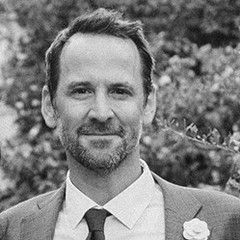
Alex Cobb, Unbabel
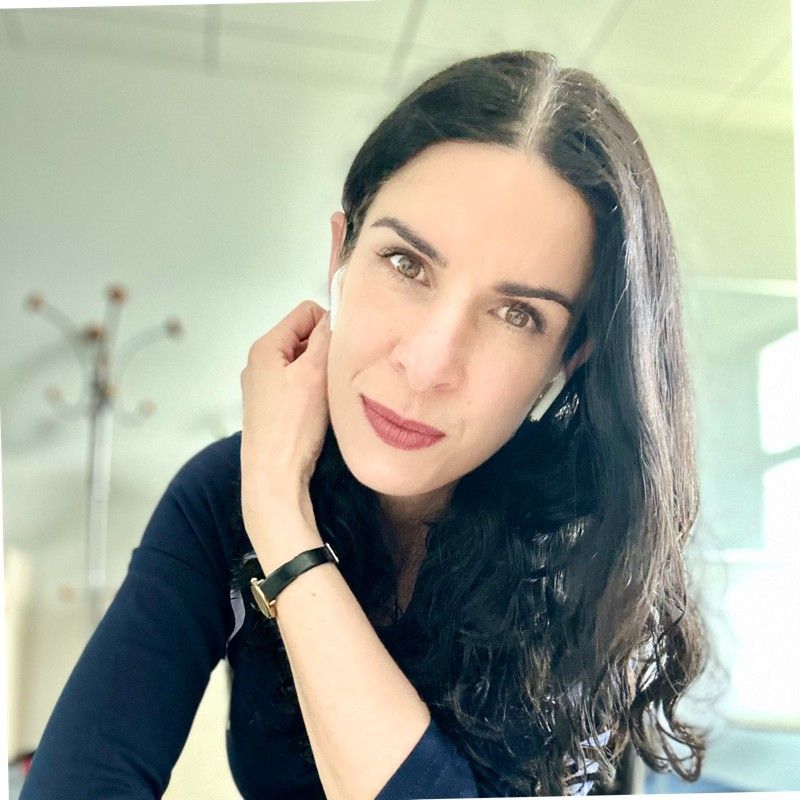
Marina Pantcheva, RWS
“The recent rise of LLMs and their emerging capabilities has sparked the temptation to utilize them for translations. Research has demonstrated, though, that LLMs perform on par with NMT when it comes to segment-level translation. Their true contribution lies in tackling linguistically complex tasks that have traditionally been reserved for human translators".

Richard Sikes, memoQ
“Although LLMs have the potential to change the language industry in remarkable ways, we at memoQ remain positive about the future of purpose-designed CAT tools in our chosen target markets".

JP Barraza, Systran
For the first time enterprises have the opportunity to literally translate everything adopting a MT First strategy. Localization business is being redefined. Everything is up for change.
In this section we have presentations from and panel discussions with globalization managers.
Speakers:
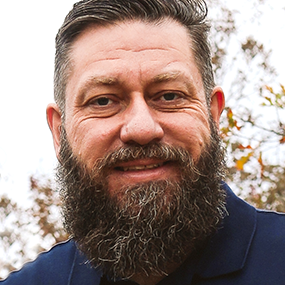
Wayne Bourland, Dell
"The question of what impact GenAI will have on what and how we translate in the future can best be answered by looking at what we don’t and do know; we don’t know how much can we trust the output, or if it will take our jobs away, or what the risk are – but what we do know is we want to adopt it as fast as we can!"
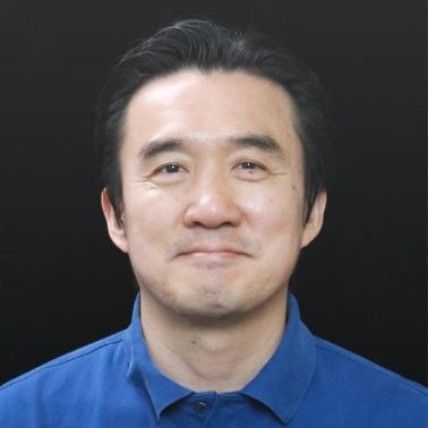
Sung Cho, Amazon
“With the AI revolution, the business model for the localization industry is shifting. I would like to share the buyer’s perspective on what the AI revolution means for future industry requirements".
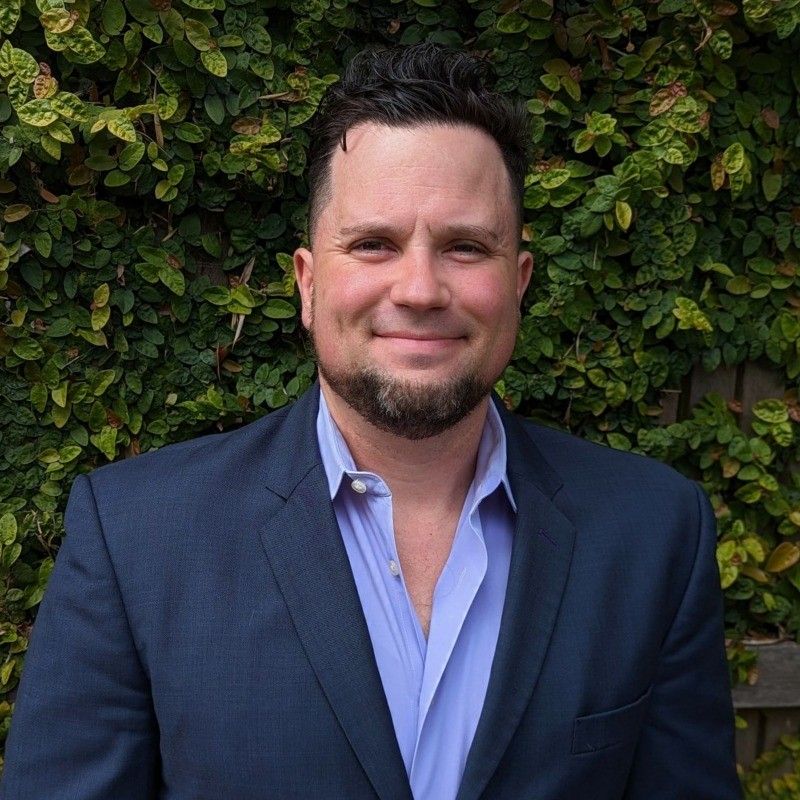
Michael Reeves, Google
“I will discuss how Google pivoted to a MT first approach where over 92% of our content is translated by an MT workflow with over 50% of our overall volume flowing through MT with no human editing".

Chris Dell, Booking

Toby Farmer, Netflix

Hameed Afssari, Uber
"Uber's Localization journey: Embracing touch-less translation through MT and Human-AI collaboration."

Tetyana Bruevich, LinkedIn
"The Future of Localization: Machine Translation vs. GAI - Competition or Collaboration?"
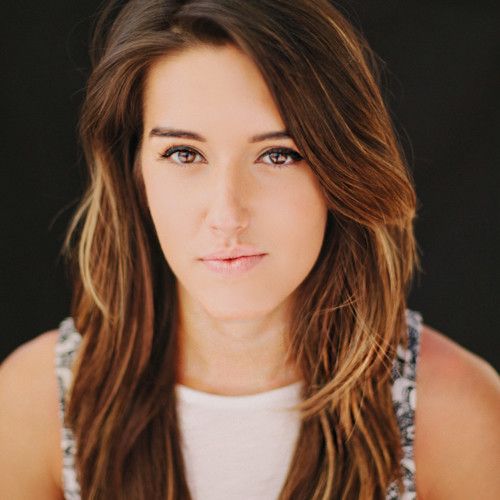
Melina Moussetis, AWS Globalization
"Exploring the combination of existing and emerging LLM and machine translation solutions to create the optimal experience for the global customer."
GenAI can handle text just as easily as speech (or images and videos). The localization revolution is therefore also about a big shift from text translation to speech translation. After all, people are lazy and prefer to speak and listen over writing and reading. How will this text-to-speech transformation play out for enterprise users and for localization providers?
In this section we have presentations and a panel discussion with companies driving this transformation.
Speech Translation, Keynote presentation:

Professor Philipp Koehn
"Exciting times for language technology, as text and speech processing are merging ever closer and address challenges in a multilingual world."
New Large Language Models are coming out every week, and allegedly they are rapidly becoming better. But how do you know whether the translation quality is good? How do you find these infamous hallucinations, the funny or embarrassing errors that are typical for the machines that can’t really think like humans but that do an amazing job of generating fluent content and translations?
In this section we have presentations from and panel discussions with researchers and developers of new QE technologies and users of these new solutions.
Speakers:

Markus Freitag, Google
"The future of machine translation depends on our ability to accurately evaluate its output."
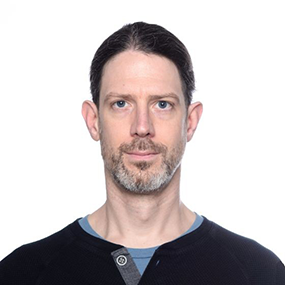
Christian Federmann, Microsoft (TBC)
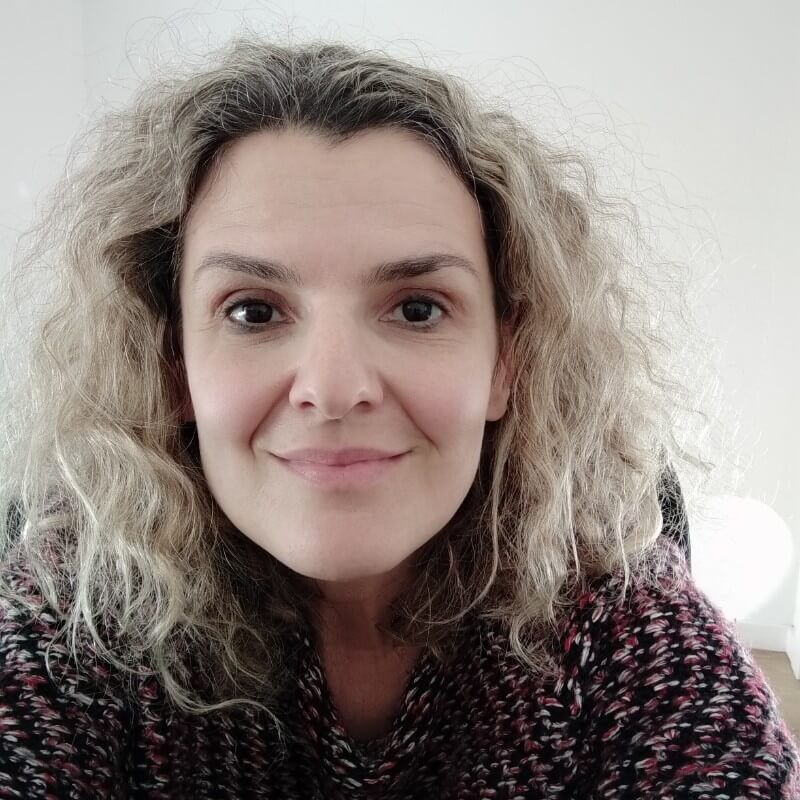
Giovanna Conte, Centific
“Discover how collaboration between LLMs and human translators enables the best of both worlds for quality evaluation".

Amir Kamran, TAUS
Kirill Agishev, Uber
"Utilizing LLMs for automating the quality estimation of Machine Translation".

Stephen Tyler, MotionPoint
Moderator:

Alon Lavie, Phrase
Paradigmatic transformations like the GenAI revolution can disrupt sectors completely. Innovators jump on the opportunities and established players adapt to protect their turf. How is the language and localization landscape shaping up?
In this section we have presentations from and panel discussions with key innovators and disruptors in the localization industry.
Speakers:
Ilan Kernerman, Lexicala
"A vital factor for producing quality AI-driven MT concerns the LLM training data’s characteristics. To enhance the utility of resources for model training, we apply a multi-layer cross-lingual approach, incorporating typical linguistic patterns in meticulously constructed monolingual datasets, which can extend multilingually."
Mathijs Sonnemans, Blackbird

Arnaud Daix, Acolad

Spence Green, Lilt
"As the use of generative AI tools for text generation proliferates, enterprise localization programs will need to develop observability tools and processes to ensure that they're not just buying ChatGPT output."
How ready is the localization industry for the revolution that is happening all around us? TAUS invites companies to compete for the special TAUS AI Localization Revolution Readiness Award. The prize can go to the company that provides the best protection to its customers against the risks of GenAI. Or to a brilliant innovator in prompt engineering, or to the smartest builder of a LLM. In a series of six minute presentations the contenders will present their solutions. The audience gets to select the winner.
Speakers:

Bruno Bitter, Blackbird

Veronica Hylak, Metalinguist
"In the wake of GenAI's transformative impact on translation, the ultimate test for technology companies lies in our ability to design intuitive, flexible tools - it will be the deciding factor for how linguists adapt, succeed and survive in this next era.”

John Weisgerber, XTM International
"Showcasing how organizations can now make sure their localized content is inclusive and appropriate through AI-powered quality assurance checks and thus safeguard their brand image in their global markets."

Frédéric Queudret, Acolad
Daria Sinitsyna, Intento
"Showing that GenAI can become a useful tool to simplify the current Linguistic Quality Assessment workflow."
Alex Yanishevsky, Smartling
"Mitigating known machine translation issues around lack of context and repeated errors with LLMs by using document-level translation and Reinforcement Learning-based human-in-the-loop input."
Vmware & Centific
- 13:00 - 17:30Three parallel sessions:

GenAI in Localization
Quality Estimation Workshop
Unleashing the Power of SeamlessM4T
- 18:00 - 20:00Opening Reception
- 08:00 - 9:00Registration Opens

Coffee and tea (expo is open)
- 09:00Welcome & Program Overview
- 09:10The Quality Dilemma
- 10:40Refreshment Break
- 11:10MT in the Post-ChatGPT World - The Big Tech Perspective
- 12:30GenAI Shines a New Light on Translation QE, Alon Lavie (Phrase)
- 12:40Lunch Break
- 14:00AI Revolution Readiness Contest - First episode
- 14:20The MT-Translator Symbiosis
- 15:30Refreshment Break
- 16:00AI Revolution Readiness Contest - Second episode
- 16:20How GenAI Disrupts and Innovates Data Services
- 17:00Adjourn
- 18:00Networking Dinner
- 08:00 - 9:00Registration Opens
Coffee and tea (expo is open)
- 09:00Welcome & Program Overview
- 09:10Multilingual Speech
- 10:20AI Revolution Readiness Contest - Third episode
- 10:45Refreshment Break
- 11:15Localization Business - The Enterprise Perspective
- 12:40Lunch Break
- 14:00Localization Business - The Provider Perspective
- 15:00The Fundamentals of TAUS DeMT™ Estimate
- 15:30Refreshment Break
- 16:00Any Questions, with Paul Mangell
- 16:50Wrap-up & Announcement of AI Revolution Readiness Winner
